Quick Navigation
Role of the Paediatrician
The paediatrician plays a vital role in the physical and emotional well-being of your child, setting them on the path to becoming a thriving, contributing member of society.
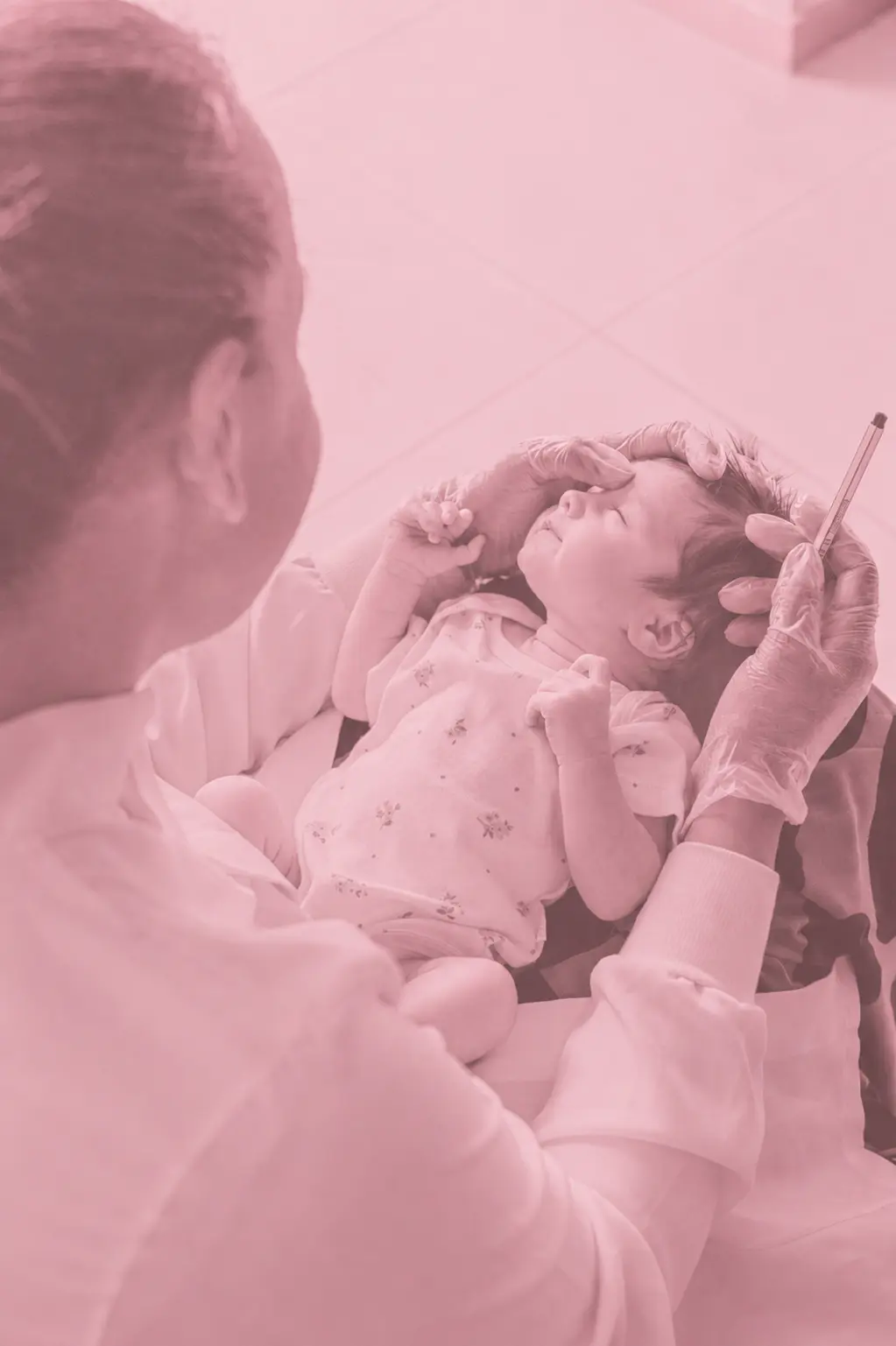
For most families, the paediatrician is the first point of contact - and the first source of reassurance — when a child is brought in for a medical check. Over time, this grows into a continuing relationship between the paediatrician and the parent. The medical community can also help adoptive and prospective parents dispel myths and address medical concerns around adoption.
This care and attention becomes even more important for children in the initial years after adoption, sometimes because of gaps in care during the gestational period, post-natal care, or time spent in an adoption home. Paediatricians who bring a child-centric approach, along with compassion and empathy for parents, make a real difference given the many unknowns and variables in the early adoption journey.
The Pre-Adoption Medical Check
A complete general physical examination gives your paediatrician a clear picture of your child's health at the time of adoption, and forms the baseline for everything that follows.
What the Examination Covers
- Nutrition assessment
- Hygiene
- Head-to-toe physical examination, including plotting of growth charts
- Screening for the presence or absence of congenital abnormalities
- Review of developmental milestones — attained or not yet attained
Hearing Screening
Two screening tests are commonly used to check a child's hearing:
- Automated Auditory Brainstem Response (AABR): Measures how the hearing nerve responds to sound, played through soft earphones into the baby's ears
- Otoacoustic Emissions (OAE): Measures sound waves produced within the inner ear
Understanding Your Child's Medical History
If medical documentation about the biological parents is available, it's worth focusing on:
| Area | What to Check |
|---|---|
| Birth history | Full term or preterm, vaginal or c-section delivery (and indication, if c-section), post-delivery complications such as jaundice or respiratory distress/ICU admission |
| Mother's obstetric history | Previous childbirths, history of congenital anomalies, history of abortions |
| Parents' medical history | Anaemia, thyroid or psychological disorders, teratogenic medication use, HBsAg/HIV status, familial diseases (sickle cell, haemophilia, thalassemia), blood groups, tuberculosis, asthma, diabetes, hypertension, seizure disorders, and breastfeeding history |
If No Medical Documentation Is Available
The best way forward is a complete, thorough head-to-toe examination of the child along with all the required blood investigations. On the immunisation front, a catch-up schedule can be followed based on the child's age, after which the usual immunisation guidelines apply.
Recommended Lab Tests After Adoption
Basic screening tests that should be done at the time of adoption:
- CBC and peripheral smear — to rule out anaemia
- Liver function test
- Renal function test
- Thyroid screening
- TORCH — infection screening for toxoplasmosis, rubella, CMV, herpes and others
- HBsAg for hepatitis B
- HIV — I & II
- Urine screening for inborn errors of metabolism
Additional tests, including those recommended in high-risk areas:
- ECG and ECHO — to rule out congenital heart defects
- USG abdomen — for congenital anomalies such as malrotations of the gut, malformed organs, or diaphragmatic hernias
- Chest X-ray
- HbS for sickle cell anaemia
- Hb electrophoresis for thalassemia
- Peripheral smear for malarial parasite
Serological tests such as HIV and hepatitis screening are especially important in a country like India, where the prevalence of these infections is high. Consider performing these at the time of adoption if documentation is unavailable.
Immunisation
Understanding your child's vaccination status — and how to fill any gaps — is one of the first practical steps after adoption.
What is Catch-Up Immunisation?
Catch-up immunisation is a blanket immunisation schedule given when vaccination records are unavailable, or when a child begins the immunisation process later than usual.
You can check the number of vaccines your child should have received by their age against the National Immunisation Schedule published by the Indian Academy of Paediatrics.
Where to Get Your Child Immunised
Immunisation is available at any primary, secondary or tertiary health care centre. Most hospitals and nursing homes with a paediatric facility are equipped for vaccination under the National Immunisation Schedule. That said, it's always better to go to a known paediatrician who can assess your child and make sure the process — and future follow-ups — stay simple and consistent.
Developmental Milestones
Child development is the complete set of changes that carry a helpless newborn to a walking, talking child and, eventually, adult. In the usual sequence, this is a one-way process that unfolds largely on its own — provided the brain and body are supported, protected and given a good environment.
The challenge with adoption lies in providing that right support and environment, and then allowing the natural process to unfold. The intrauterine period and the earliest days after birth may not always have been ideal environments for adopted children — though, of course, the same can be true for biological children too. Fortunately, the brain has a remarkable ability to change, repair and rewire itself given enough time and space, at any point in life. This "neuroplasticity" is the key to developmental success, and harnessing it is something every parent — adoptive or otherwise — learns as they go along.
What Differences Can You Expect?
Physical: Nutritional gaps can leave a child underweight or stunted, with common deficiencies in iron, calcium and vitamins. The encouraging news is that nutrition is one of the easiest things to remedy — even months or years of malnutrition can recover in a matter of weeks to months with adequate care.
Developmental milestones: Both intrauterine and early-life environments matter for a child's development, and gaps here can show up as delays — most commonly in gross motor milestones (rolling over, head control, sitting, standing, walking) and in language, since language depends heavily on a consistent primary caregiver. Children in group-care settings often miss out on this one-on-one interaction, and in India, a change in the language spoken to the child around the time of adoption can add to the delay.
The good news: most of these delays can be rectified, even at later stages. The majority of adopted children catch up with their peers within months to years, and go on to reach the same developmental potential as any other child. What they need is opportunity and time — both of which lie in the hands of the parent. Development in an adopted child follows the same natural path as in biological children, just with a somewhat higher chance of initial delays that patience and support can close.
Milestones by Age — and the Red Flags to Watch For
0–3 Months
- Smiles at faces (social smile)
- Vocalises (ooo, aaah, nggg sounds)
Red flag: No smile by 20 weeks
3–6 Months
- Good head control when held upright
- Rolling over
- Reaches for and holds objects with either hand equally
- Mouths objects
- Makes sounds like ma, da, ba (no meaning yet)
- Recognises mother or primary caregiver
Red flags: Poor head control by 6 months; consistently preferring one hand while reaching; no sounds at all
6–9 Months
- Sits alone
- Crawls or moves around
- Transfers objects from one hand to the other
- Plays peekaboo and laughs
- Shows stranger anxiety
Red flags: No attempt at sitting with support by 9 months; no attempt to crawl or move; no single syllables by 9 months
9–12 Months
- Pulls herself up to standing
- Cruises, holding onto furniture
- Holds small objects between thumb and finger
- Says two-syllable words (mama, papa) without clear meaning yet
- Waves bye-bye and claps when asked
Red flags: No sitting by 10 months; no pulling to stand by first birthday; doesn't wave or follow instructions; no stranger anxiety or recognition
12–18 Months
- Walks alone
- Scribbles with a pencil
- Says a few meaningful words
- Understands many words and simple directions
Red flags: Not walking by 18 months; can't point to common objects when asked; still mouthing objects; poor eye contact; no meaningful words by 18 months
18–24 Months
- Runs and jumps with both feet
- Goes up stairs (coming down is still tricky)
- Throws a ball and draws simple lines
- Names 3–5 body parts
- Speaks about 50 words with meaning by 2nd birthday and starts joining two words together
Red flags: Fewer than 50 words by 2nd birthday; doesn't follow single-step directions or point to common objects/body parts; unable to scribble; toe-walking after 2nd birthday
2–3 Years
- Goes up and down stairs holding a rail
- Throws a ball well and attempts to catch
- Draws a circle by 3rd birthday
- Names all body parts and talks in sentences (200+ words by age 3)
- Feeds herself, removes clothes, starts indicating toilet needs
Red flags: Fewer than 100 words by 3rd birthday; doesn't follow 2-step directions; no attempt at bowel control
3–5 Years
- Rides a tricycle and manages stairs independently
- Plays on a slide or swing; kicks, throws and catches a large ball
- Attempts to imitate shapes (square, cross, triangle) with a pencil
- Dresses and eats independently (may still need some help)
- Daytime bladder and bowel control by 5th birthday
- Narrates a simple story with prompting and recognises a few colours
Red flags: Not talking in sentences by 4th birthday; unable to draw lines/shapes; clumsiness, tremors or unsteadiness; poor pronunciation by 5th birthday; no bladder/bowel control; unable to manage self-care tasks; not interested in playing with other children; unable to sit in a classroom for 30 minutes by 5th birthday
Key Red Flags Up to Age 3
- Lack of social smile by 2 months
- Absence of stable head control by 4 months
- Inability to recognise mother by 6 months
- Inability to sit when pulled to sit by 6 months
- Lack of independent sitting without support by 8 months
- Lack of creeping or crawling by 9 months
- Inability to stand without support by 1 year
- Lack of pincer grasp by 1 year
- Inability to play interactive games by 1 year
- Inability to walk without support by 18 months
- Absence of bi-syllable word making by 1 year
- Absence of meaningful sentence making by 3 years
Follow-Up Schedule After Adoption
- Social worker check-in once every 6 months, for 2 years
- Paediatrician review every 3–6 months
- Monthly progress notes maintained by adoptive parents
Understanding Growth Charts
A growth chart is used by paediatricians and other healthcare providers to track a child's growth over time, built from observing large numbers of typically-developing children.
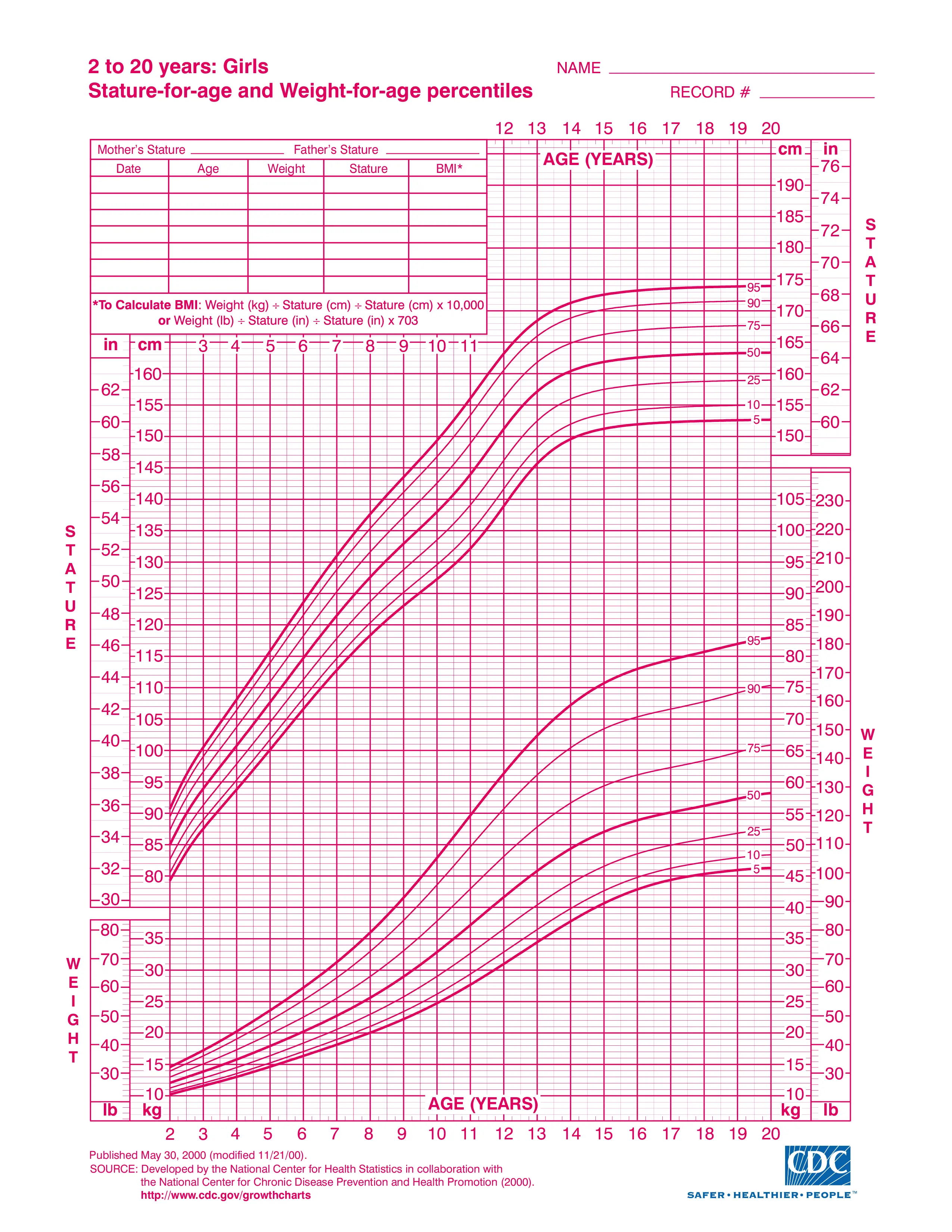
Your child's height, weight and head circumference are compared to expected parameters for children of the same age and sex, to check whether growth is on track. Because children tend to maintain a fairly constant growth curve, these charts can also help predict expected adult height and weight — and any deviation from a child's established curve usually prompts further investigation.
When Your Provider May Watch More Closely
- A measurement stays below the 10th percentile or above the 90th percentile for age
- Head growth is too slow or too fast when tracked over time
- A measurement doesn't stay close to one line on the graph — for example, a 6-month-old at the 75th percentile who drops to the 25th percentile by 9 months, and lower still by 12 months
Abnormal growth on a chart is only a sign of a possible problem — your doctor will determine whether it points to an actual medical issue, or simply needs watching over time.
Nutrition
Gaps in developmental milestones and nutritional benchmarks are common among children through adoption. These gaps vary from child to child — often wider in older children and those with special needs — but in time, they can be bridged and deficiencies circumvented.
Much depends on what the birth mother experienced during the gestational period and after delivery, since many come from economically disadvantaged circumstances. Understanding the extent of these gaps — especially within the "golden 1,000 days" from conception until the child turns two — is important.
Micronutrient & Macronutrient Deficiencies
Children may have minor to major deficiencies. Micronutrient deficiency refers to a lack of vitamins and minerals such as calcium, folate, iron, iodine, zinc, vitamin A, vitamin B12 and vitamin D (leading to rickets). Macronutrient deficiency refers to a lack of carbohydrates, protein and fat — the nutrients needed in larger amounts for normal growth — and can cause stunting, wasting and other childhood health complications.
What Contributes to Malnutrition and Deficiencies?
- Inadequate pre-natal, post-natal and maternal diet
- Insufficient breastfeeding
- Insufficient nutritious food at institutions or agencies, especially for children with special needs
- Inadequate sunlight exposure, which limits vitamin D production needed for calcium absorption
- Lack of vitamin supplements
- Stress and disrupted feeding patterns during the transition from birth mother to institution to new family
- Fast post-adoption growth, which places extra stress on limited nutrient reserves
Fortunately, most of this is treatable and within your control — nutritional gaps in adopted children are among the easiest challenges to bridge.
Building a Transition Diet
- Follow the institution or agency's diet and sleep schedule for the first couple of weeks to a month
- Gradually shift to the pattern best suited to your child as they settle into their new home
- Allow some "comfort food" from their familiar cuisine, introduced slowly alongside your chosen diet
- Stay aware that nutritional needs and deficiencies vary from child to child — depending on the mother's health during pregnancy as well as the care received at the institution
- Focus on well-balanced meals built around your child's likely deficiencies
- Be especially mindful with special needs children, who are at greater risk of malnutrition and poor growth
Catch-Up Growth & Refeeding Syndrome
Catch-up growth is a faster-than-normal rate of weight and length gain that happens when a child receives more calories and protein at home. It occurs in most adoptees and is especially critical for severely malnourished children.
Refeeding syndrome refers to fluid and electrolyte disturbances that can occur when a child is given too many nutrients too quickly. To avoid this in severely malnourished children, consult a paediatrician or dietician before ramping up intake.
Common Nutritional Deficiencies
- Calcium deficiency
- Folate deficiency
- Iodine deficiency
- Iron deficiency anaemia
- Protein-energy malnutrition
- Vitamin A deficiency
- Vitamin B12 deficiency anaemia
- Vitamin D deficiency (rickets)
- Zinc deficiency
Early Signs of Nutritional Deficiency
- Depression and anxiety, or hyperactivity
- Delayed speech
- Dry skin and hair; light or brown-coloured hair
- Crowded, discoloured or late-erupting teeth, or cavities
- Low immunity to coughs and colds
- Cranky or sporadic emotions
- Poor cranial or flat head structure
- A tired, listless child
Recommended Lab Tests for Dietary Deficiencies
| Test | What It Checks |
|---|---|
| CBC & differential count | Decreased levels may indicate anaemia (iron, folate or B12 deficiency), chronic illness, lead poisoning or nutritional deficiency |
| Serum ferritin / transferrin receptor | Checks iron stores and cellular iron status — can detect deficiency before anaemia sets in |
| Thyroid Stimulating Hormone (TSH) | Tests for thyroid hormone deficiency, often linked to iodine deficiency |
| 25-hydroxy Vitamin D | Assesses vitamin D levels and risk of rickets |
| Stool test for ova & parasites | Screens for gut infections that can inhibit nutrient absorption if untreated |
| Serum zinc | Deficiency raises risk of infectious disease and atypical cognitive development |
| Vitamin B12 | Deficiency raises risk of neuropsychiatric and neurologic complications |
| Standard anthropometric measures | Height/length, weight and head circumference — maintaining growth matters more than reaching a specific percentile |
Simple Ways to Boost Nutrition
The best way to accelerate growth is by adding calories and protein to foods your child already wants to eat — every bite counts for slow or picky eaters.
- Add nuts, fig or date paste to oatmeal
- Purée legumes and add them to sauces and soups
- Add almond powder to porridge or oatmeal
Traditional Homemade Nutrition Mixes
These non-commercial, scientifically-backed recipes from the National Institute of Nutrition are inexpensive, easy to prepare, and effective at bridging protein-energy malnutrition.
| Mix | Ingredients | Nutrition (per 100g) |
|---|---|---|
| Davengere Mix | Equal parts ragi, roasted bengal gram powder, roasted groundnut powder and jaggery syrup | 14g protein, 400 kcal |
| Hyderabad Mix | Whole wheat (40g), bengal gram powder (16g), groundnuts (10g), jaggery (20g) | 11.3g protein, 330 kcal |
| Besan Panjiri | Equal parts bengal gram powder and wheat flour, with jaggery and ghee | 9g protein, 500 kcal |
| Shakti Aahar | Roasted wheat (40g), roasted gram (20g), roasted peanuts (10g), jaggery (30g) | 11.4g protein, 394 kcal |
Need guidance on your child's nutrition plan? Contact us at adoptpadme@gmail.com to speak with a specialist.
Children with Special Needs
Differently-abled children are generally not the first choice of prospective adoptive parents — yet they are often the ones most in need of a loving, supportive family to reach their full potential.
A child with special needs is one who can benefit most from the individualised care and resources that adoptive parents can provide, more than an institution ever could. From a parent's point of view, every child is a source of happiness, love, meaning and learning — children with special needs are no exception.
Adopting a Child with Special Needs
- The adoption process is typically easier and faster
- More children in this category are available for adoption
- Access to special medical care, awareness and extra attention
- A child can be adopted just 15 days after being declared legally free for adoption
Common Disabilities
| Physical | Mental / Developmental |
|---|---|
| Epilepsy / convulsions / seizures | Autism |
| Paralysis | Intellectual disability |
| Multiple sclerosis | Speech impairment |
| Neurological disorders | Conditions requiring psychiatric treatment |
| Severe learning disability |
Follow-Up Schedule
- Identify and address acute and chronic medical problems, vision and hearing loss, and developmental delays — hearing screening in infants is especially important
- Evaluate behavioural and emotional concerns proactively, with appropriate therapy initiated early
- Maintain proper medical evaluation, therapy and follow-up from the point of diagnosis for the best long-term outcome
Building a Plan of Action
- Get educated about your child's condition. It can feel overwhelming at first, but learning more — especially about children with similar conditions who go on to lead fully functioning lives — builds the confidence to make good decisions
- Look beyond academics. Learning-related conditions can affect time management, organisation, focus, memory and reasoning, not just specific subjects
- Involve your child's care team. Reach out to therapists, paediatricians, school counsellors and teachers to learn more and ask questions directly
- Join a support group. Connecting with other parents raising children with similar needs offers insider knowledge, community and reassurance that you're not alone
- Set realistic, collaborative goals. Work with your child's treatment team to set short- and long-term goals, then revisit and adjust them regularly
- Stick to a routine. Predictable schedules help your child learn in a structured way and reduce confusion and overwhelm
- Avoid self-pity — practise empathy instead. Recognise small victories, lean on your strengths, and draw perspective and inspiration from others who've navigated similar journeys
- Stay involved at school. Be your child's advocate — work with the school system on objectives, Individualised Education Plans (IEPs), and share new, effective approaches as you learn them
Specific Learning Disabilities
Most academic learning takes place during school years, delivered by a teacher or facilitator. When a child shows large gaps in learning and understanding, it's worth examining where those gaps come from — and how to address them.
Specific Learning Disabilities (SLD) is an umbrella term describing several kinds of learning difficulties. SLD should not be confused with learning issues that stem from economic, cultural or social disadvantage, intellectual disability, delayed childhood milestones, emotional trauma or physical handicaps. Its underlying cause is neurologically-based processing difficulty in the brain, affecting basic academic skills like reading, spelling, math and writing. There is no single identifiable cause — most research points to a combination of genetics and environment. Importantly, children with SLD typically have average or above-average intelligence, but struggle to perform on tests and in the standard academic system.
Types of Specific Learning Disabilities
- Dyslexia: Difficulty with language processing, including reading and writing
- Dysgraphia: Difficulty with graphomotor or writing skills
- Dyscalculia: Difficulty with math and number-related processing
- Auditory processing disorder: Difficulty differentiating between sounds
- Language processing disorder: Difficulty associating words with meaning
- Visual motor/perceptual disorders
- Nonverbal learning deficit: Difficulty processing nonverbal cues
- Related conditions: ADHD, dyspraxia, memory-related deficits, and difficulties with planning and organisation
Diagnosis Matters — Early
A child who struggles is too often labelled lazy, diffident, or "dumb." The first step is realising that isn't so. A proper assessment — usually involving a paediatrician, special educator and psychologist or counsellor together — helps distinguish SLD from other conditions. The earlier this is done, the earlier a child can be helped with strategies to cope and close the gaps in learning.
There is no "cure" for SLD, because it isn't a disease — but remedial education is essential. This means teaching in the style that works best for each child, helping close skill gaps, and building strategies for independent functioning, all with the goal of minimising the effect on the child's social, emotional and intellectual life, now and as an adult.
SLD affects children across every background — economically privileged or disadvantaged, urban or rural, biological or adopted — and is now believed to be equally common in boys and girls. In children through adoption, some pre-adoptive history of stress, genetics or trauma may be unknown, which can make differential diagnosis more complex. That said, a child benefiting from the supportive home environment that adoptive parents typically provide is often well positioned to receive and respond well to remediation.
Strategy for Dealing with SLD
- Early identification of the condition
- Acceptance of the situation by parents, adoptive or biological
- Ensuring adequate remedial education
- Working with the child's strengths and building their confidence
- Engaging with the child in a supportive way — at home and through an inclusive school
- Encouraging the child's interests — many children with SLD show real talent in music, art, sport or the performing arts
What NOT to Do as Parents
- Don't delay diagnosis or assessment
- Don't expect a "cure"
- Don't project your own academic expectations onto the child
- Don't label the child lazy, unmotivated or "dumb"
- Don't attribute the cause of SLD to adoption — it is not the cause
- Don't assume the child will cope on their own — most cases need some remediation
- Don't overplay the condition — the child needs support, not overindulgence
- Don't lose hope — your child's journey is one of a kind, and small changes in teaching strategy can make a real difference
Frequently Asked Questions
What are food allergies, and how do I know if my child has one?
+A food allergy happens when a person's immune system treats a substance — an allergen — as an inappropriate invader. Signs to watch for include:
- Itchy mouth and throat when eating certain foods
- Hives (raised, red, itchy bumps on the skin)
- Stomach trouble (diarrhoea, cramps, nausea, vomiting)
- Swelling of the face or tongue
- Trouble breathing
How do I know if my child is lactose intolerant?
+Lactose intolerance happens when the body doesn't produce enough lactase, the enzyme that breaks down lactose in dairy products. It's rare in young children and usually develops after age 3, though it may persist for some children while others adjust.
You can meet your child's calcium needs with lactose-free or lactose-reduced milk, along with:
- Fortified soy milk
- Yogurt
- Orange juice
- Broccoli
- Almonds
- Ragi
Vitamin D intake may also be inadequate in this case, so speak to your physician about supplementation.
What is PICA, and what does it signify?
+PICA is the persistent eating of non-nutritious substances, often a sign of nutritional deficiency and potentially harmful to the child. It's common for young children to put non-food items in their mouths out of curiosity — sand being a typical example — but in children with PICA, that curiosity becomes a compulsion.
Commonly ingested items include sand, ice, paint flakes, glue, chalk, powders and soap; more dangerous items include glass, stones, metal objects and faeces. PICA is often linked to iron, calcium or zinc deficiency, and can also stem from worm infestation, developmental disorders, or psychosocial concerns.
Managing PICA: for some children, it resolves with simple behavioural strategies; others need a more advanced, professional approach. If symptoms persist beyond a month, consult your paediatrician. Helpful steps for parents include improving communication with your child, creating a "PICA box" of edible alternatives, and using positive reinforcement when your child avoids the behaviour.
What is the best infant formula, and how do I choose one?
+Baby formula is the next best substitute for breast milk, and most milk-based formulas are designed to act as alternatives to it. Commonly available options in India include Similac Advance, Lactogen, Enfamil A+, Farex Stage 1 and Nutricia Dexolac.
When choosing a formula, check its form, the type of protein and carbohydrate it contains, and its full ingredient list. Choose one that dissolves easily in boiled water without leaving lumps, and always check with your paediatrician for milk allergies before starting. An iron-fortified, cow's-milk-based formula is generally recommended for the first 9–12 months. Always follow the packaging instructions carefully — adding more or less formula than directed can make an infant ill.
What is iron deficiency anaemia?
+Iron is a mineral babies and children need for good health and development. Red blood cells contain haemoglobin, a protein that carries oxygen throughout the body, and the body needs iron to make it. Without enough iron, red blood cells become small and pale and can't carry enough oxygen to organs and muscles — this is anaemia.
What are the medical lines of treatment for nutritional deficiencies?
+Treatment depends on the type and severity of the deficiency. Consulting a physician is important to close the gaps caused by lack of nutrients — with the right treatment and diet plan, symptoms usually resolve over time.
Is it difficult for children to adjust to calorie- and protein-rich foods initially?
+Yes, some children find this difficult in the early stages. It's useful to consult a paediatrician or dietician to guide the transition, especially for children who were severely malnourished before adoption.
What are the probable causes of undernutrition in some adopted children?
+- Insufficient maternal nutrition during gestation
- Improper infant nutrition and care at adoption centres
- Co-existing infections
- Post-adoption growth spurts
What role does the paediatrician play in making the adoption process smooth?
+- Conducts a proper physical, motor, verbal and mental examination of the child
- Initiates immunisation and follow-up
- Helps break social barriers by actively counselling parents
- Stays informed about the adoption process and children available for adoption
- Supports adoptive families through the various challenges they may face
Have Questions About Your Child's Health?
Our adoption-specialist paediatricians and counsellors are here to support you through every stage of your child's growth and development.
Contact Us Today